Back-to-School Brain Boost: 6 Tips to Strengthen Executive Function Skills
by Dr. Liz, July 31, 2025

Executive functions are the cognitive skills that help you get started, stay focused, manage time, remember things, and regulate your emotions; all very important things for a successful college student. According to Dr. Thomas Brown, most people with ADHD have a weakness in at least one of the six “clusters” of executive functions (EF) which include:
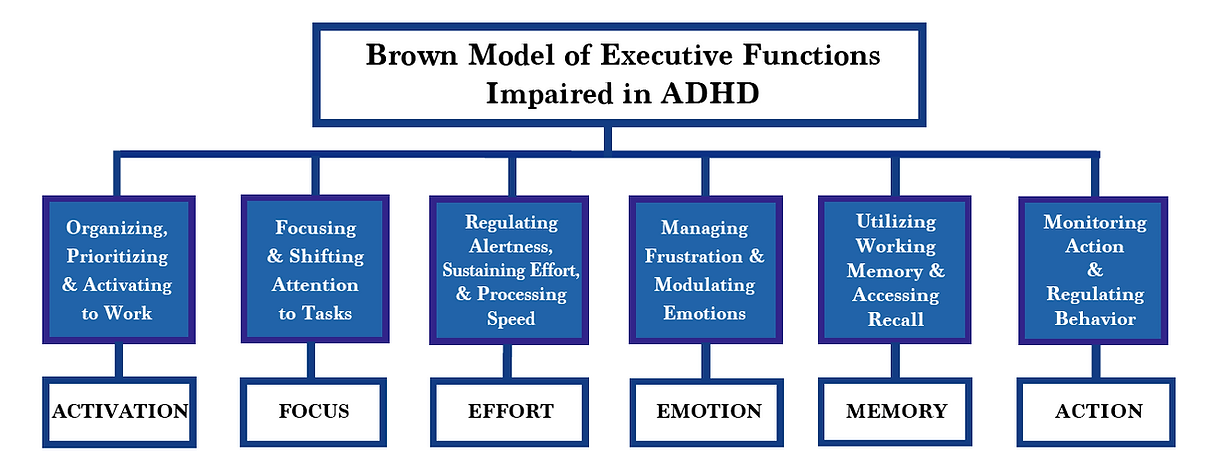
- Activation – organizing, prioritizing, and starting work
- Focus – paying attention and shifting attention when necessary
- Effort – regulating alertness and sustaining effort
- Emotion – managing frustrations and modulating emotions
- Memory – utilizing working memory and accessing recall
- Action – monitoring action and regulating behavior
The good news is that you can improve your EF skills with practice and the right strategies. Summer is a perfect
time to strengthen your weaker EF skills. Think of it as preparing your brain to be ready when you go back to school.
Here's a few things to try before the semester begins:
1. Activation: Practice Task Initiation with “Mini Missions”
 One of the biggest struggles for students with ADHD is just getting started. That blank page. That unread PDF.
Those unanswered texts and emails. That unopened backpack. It’s overwhelming, so we avoid it.
One of the biggest struggles for students with ADHD is just getting started. That blank page. That unread PDF.
Those unanswered texts and emails. That unopened backpack. It’s overwhelming, so we avoid it.
What to do:
Start practicing now with short, low-pressure tasks you might be putting off: scheduling a haircut, organizing your desk, cleaning out your backpack, or reviewing the upcoming semester’s course requirements. Pick one task, set a timer for 10 minutes, and see how much you can accomplish. Reward yourself for every small win!
Why it works:
You’ll train your brain to associate starting tasks with manageable effort and small wins. With continued practice, that momentum will be carried into your schoolwork later.
2. Focus: Use “Focus Sprints” with Timed Breaks
 You sit down to study and find yourself checking your phone, scrolling, or zoning out. It’s easy to be
distracted by things that are more exciting than your history homework.
You sit down to study and find yourself checking your phone, scrolling, or zoning out. It’s easy to be
distracted by things that are more exciting than your history homework.
What to do:
Start with a 15- to 25-minute timed session for focused work (try tools like Pomofocus or Forest). Then take a timed 5-minute break. Repeat 2–3 times.
Why it works:
ADHD brains often benefit from structured focus periods. You're training your attention while giving your brain planned dopamine boosts through short breaks.
3. Effort: Schedule “Power Hour” Blocks
 It’s hard to get to class on time and to stay awake once you get there. You feel mentally foggy during morning
lectures or can’t finish assignments as quickly as others.
It’s hard to get to class on time and to stay awake once you get there. You feel mentally foggy during morning
lectures or can’t finish assignments as quickly as others.
What to Do:
Notice when your brain feels sharpest, when it is easy to focus and get work done. It may be morning, mid-afternoon, or evening. It may have to do with your medication schedule. Once you figure out your “power hours,” reserve that time for mentally heavy tasks like reading, writing, or problem -solving. Protect that window like an important appointment. During lower-energy times, focus on lighter tasks like organizing files or replying to emails. Bonus tip: Schedule your courses during these power hours!
Why it works:
ADHD brains often have fluctuating alertness throughout the day. Matching task difficulty to your brain's natural energy rhythms helps you sustain effort and work more efficiently without burning out.
4. Emotion: Use “Emotion Check-Ins” & Self-Coaching Scripts
 You feel overwhelmed easily and shut down when things don’t go as planned. You get really mad really quickly when something unexpected happens.
What to Do:
When your emotions threaten to get the better of you, pause and name what you’re feeling: anxious, annoyed, angry, overwhelmed. Remember the saying “If you name it, you can tame it”? Acknowledge what you’re feeling, and then practice a coping phrase like, “This is hard, but I can figure it out step by step.” Or “I can’t do it yet, but I will keep trying.” Post a few go-to phrases in your phone, planner, or workspace.
Why it works:
Naming emotions increases awareness and gives you a moment to pause before reacting. Self-coaching creates a buffer between the feeling and the response. That buffer is crucial for emotional regulation.
5. Memory: Use Visual and External Memory Tools
 You forget what your professor said in class, or you lose track of steps while working on assignments. You keep
locking yourself out of your room or forgetting to eat.
You forget what your professor said in class, or you lose track of steps while working on assignments. You keep
locking yourself out of your room or forgetting to eat.
What to Do:
Try using tools like sticky notes, digital sticky notes (e.g., Google Keep, Notion), a whiteboard, or index cards to remind yourself of important things. Post visuals of your weekly schedule, study checklists, or step-by-step instructions where you can easily see them.
Why it works:
Externalizing memory supports working memory limitations by taking some of the mental load off your brain. The more visual and visible the reminders, the better.
6. Action: Practice Self-Regulation with a “Pause & Review” Step
 You get stuck in perfectionism, rush through assignments, or have trouble noticing when you’re off track.
What to Do:
Build the habit of taking a short pause when you finish something. Ask yourself: “Did I follow the instructions? Do I need a second look?” Use checklists or rubrics to guide this step.
Why it works:
This strengthens self-monitoring — the ability to review and adjust your behavior. It helps you catch small mistakes before they become big problems.
Final Thought: Progress, Not Perfection

EF skills can be strengthened over time, but you need to practice and be consistent. Starting now, before the
semester starts, gives you a head start. Pick one area to focus on this week. Keep it simple. Start small.
Celebrate every small win. Then choose another area for next week.
You don’t need to be perfect; you just need to get started. And remember, support is part of success. Supportive
family, friends, coaches, tutors, and campus disability service staff are all part of your success team. Ask for
help when you need it.
ADHD may add some twists and turns to the college experience, but you’re not alone. You’re more capable than you
think! Strengthening your executive functions now can make a big difference in how confident, calm, and prepared
you feel when the semester begins. Good luck!
If this article resonated with you, let’s stay connected! Follow me on Instagram
for more ADHD-friendly strategies, encouragement, inspiration, and tips.
Ready to stop spinning your wheels? Learn more about ADHD Coaching and how we can create personalized systems
to help you move forward. If you’re interested, schedule a free 30-minute consultation. You don’t have to do
this alone.
Image Sources
- Brown's Model: https://www.brownadhdclinic.com/brown-ef-model-adhd
- Start Playing: https://depositphotos.com/photos/getting-started.html
- Tomato Timer: https://www.amazon.ae/Nicoone-Pomodoro-Mechanical-Minutes-Countdown/dp/B09BVCC9VW
- Alarm Clock with Muscles: https://www.warriortrading.com/power-hour-stocks/
- Emoji Faces: https://medium.com/@zoe_starryeyes/the-side-effects-of-emotions-50f64d9a79b4
- Brain with Sticky Notes: https://memoryos.com/article/how-to-increase-working-memory-the-art-of-remembering
- Pause Keyboard: https://annejanzer.com/how-to-take-a-meaningful-pause/
- Progress Not Perfection: https://www.livritefitness.com/blog/progress-not-perfection
Have a question about ADHD coaching or this post? Contact me here!