Crushing College with ADHD
Exceed your expectations!


How Comparison Derails Motivation for College Students With ADHD
Is It Me?! January 11, 2026
You see other students finishing assignments early, raising their hands in class, juggling internships and social lives, and somehow still sleeping well. Meanwhile, you’re staring at your laptop, knowing what you want to do, need to do, but feeling unable to start. Then the comparison spiral starts. Why is this so easy for them? Why do I always fall behind? What’s wrong with me?

How Hydration Helps ADHD Brains Focus, Think Clearly, and Feel Better
Fuel Your Focus with Water. November 1, 2025
Have you ever been halfway through a study session and felt your focus completely disappear? You reread the same sentence over and over and can’t seem to concentrate? The brain fog has rolled in and your motivation disappears. You might assume it’s your ADHD, but sometimes, it’s actually dehydration.

Control the Scroll: Tackling Technology Addiction
Just One More Video . . . October 5, 2025
How many times have you opened TikTok “just for a minute” and looked up an hour later wondering where the time went? You’re not alone. The average American checks their phone 205 times a day (that’s about once every seven minutes) and spends nearly a quarter of their waking hours staring at it.
Why the First Two Weeks of the Semester Matter (and How to Use Them Wisely)
Start Strong! September 1, 2025
You know that feeling when the semester starts, and suddenly it’s midterms before you’ve even caught your breath? For students with ADHD or executive function (EF) challenges, time can slip by very fast. The truth is that the first two weeks of the semester are more important than most students realize. Think of them as your foundation; the base you build now that will support the rest of your semester.

Back-to-School Brain Boost: 6 Tips to Strengthen Executive Function Skills
Train That Brain! July 31, 2025
Executive functions are the cognitive skills that help you get started, stay focused, manage time, remember things, and regulate your emotions; all very important things for a successful college student! According to Dr. Thomas Brown, most people with ADHD have a weakness in at least one of the six “clusters” of executive functions. The good news is that you can improve your EF skills with practice and the right strategies. Summer is a perfect time to strengthen your weaker EF skills . . .

When Every Choice Feels Overwhelming: ADHD and Decision Fatigue
Should I Stay or Should I Go?! June 30, 2025
Some people have no problem making decisions. They choose an option and move forward. But for people with ADHD, the decision-making process can quickly become overwhelming. Decision-making is a complex, multi-step process. They need to figure out their options, compare and contrast them, and think through the consequences of their final choice. Throw in some anxiety about making a big decision, or a time limit that is forcing their hand, and the decision making gets even harder.

Make Summer Count—Without Burning Out
Build Skills, Not Stress! May 31, 2025
For students with ADHD, summer can feel like a welcome escape after a busy academic year. Without classes, deadlines, and academic pressures, you may be tempted to completely unplug and relax. But summer is a great opportunity to build routines and habits that support your executive function skills, so you’re better prepared when the fall semester begins.

Small Wins, Big Results: Making Writing and Research Less Overwhelming
Overcome the Overwhelm! April 27, 2025
If you’re a college or grad student with ADHD or executive function challenges, you already know that writing and research aren’t just academic tasks; they can feel like mountains you need to scale. Some days you’re climbing with momentum. Other days, it feels like you're staring up from base camp, wondering how you’re going to take the first step. Read on for four simple strategies to battle overwhelm and start making progress.

Progress Over Perfection: Moving Forward When Perfectionism Holds You Back
Start messy and keep going! March 29, 2025
The quote “perfection is the enemy of progress” is commonly attributed to Winston Churchill. Regardless of who said it, continually striving for unattainable perfection can be counterproductive and hinder actual progress.

Stay on Top of Your Work: 3 Strategies
Move from stuck to successful! February 28, 2025
If you’re a college student with ADHD, you probably have big academic goals. You want to stay on top of assignments, focus during long study sessions, and manage deadlines without last-minute panic. But executive function challenges—like trouble starting tasks, staying organized, and maintaining focus—keep getting in the way. Sound familiar? ADHD impacts how your brain processes tasks, but that doesn’t mean you can’t succeed. The key is learning to work with your brain, not against it.

Creating Habits that Stick
Change your habits, change your life! January 31, 2025
Building strong habits is a key to success in college, especially for students with ADHD. While developing habits can be challenging due to difficulties with consistency, motivation, and organization, it is possible to create and maintain habits with the right strategies. Read more for some ideas to help you build lasting habits and set yourself up for success.

The Effects of Stress and Anxiety on Executive Functions
Oh nooooooooo! March 31, 2024
Executive Functioning (EF) is required for successful goal-directed behavior. That means EF helps you plan, organize, make decisions, solve problems, and stay focused on your goals. It's what helps you pay attention in class, manage your time, and control your impulses. When your EF is working well, it helps you stay on track and be successful in school and life. When your EF is not working well, college can become particularly demanding, especially for students with ADHD who may already have difficulties with attention, hyperactivity, and/or impulse control. And stress and anxiety can make EF challenges even worse . . .

The Myth of Multitasking
Be like a stamp - stick to one thing! November 22, 2023
Multitasking is performing multiple activities simultaneously. It requires “cognitive flexibility” – sometimes called task switching – which is your brain's ability to adapt to new, changing, or unplanned events. Multitasking requires controlling and shifting your focus and attention, which can be particularly challenging for people with ADHD who tend to become distracted. From a neuroscience perspective, there is no such thing as multitasking. The brain can only do one thing at a time, so what we call multitasking is really just fast task-switching. And it is a myth that it helps us be more productive.

Self-Regulation: Time Management
What Time is It?! October 15, 2023
ADHD affects executive functions – the cognitive processes that help people regulate their thoughts, actions, and emotions in order to achieve goals, solve problems, and make decisions. Dr. Thomas E. Brown created a Model of Executive Functions that may be impaired in people with ADHD. If you have trouble with time management, and many people with ADHD do, he believes that there are two executive functions impaired – Activation (measuring and estimating time) and Effort (difficulty with sustained effort over longer periods of time, difficulty completing tasks on time).

Paying the Price for ADHD
How Much is Too Much? August 26, 2023
Have you heard of the “ADHD Tax”? It refers to the additional costs that individuals with ADHD (Attention-Deficit/Hyperactivity Disorder) may incur due to the unique challenges associated with the condition, compared to people without ADHD. The costs include the extra money, time, and effort often invested by people with ADHD to enable them to accomplish tasks. The “tax” can impact work, school, relationships, and overall well-being.
Body Doubling With ADHD
Are You With Me?! March 18, 2023
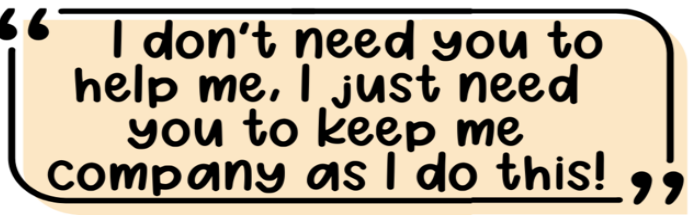
Many people with ADHD have trouble with initiating and completing tasks. This is especially true for tasks that are boring, mundane, difficult, or complex. It’s hard to get started if you are anxious or unmotivated. It’s hard to keep going if you are easily distracted or just can’t focus. This can result in sloppy work, missed deadlines, and feelings of guilt and shame. Instead of going it alone, why not give body doubling a try?

Ready, Set, Goals!
How Are Those New Year's Resolutions Going? January 12, 2023
On January 1, many people make New Year’s resolutions. By January 7, many people’s resolutions have failed! In fact, only 36% of individuals who have made a resolution will make it past the first month, and only 9% will actually successfully keep their resolutions1. What happens?! Well, several things. People lose motivation, they get too busy with other priorities, or their goals change. For people with ADHD, there are additional barriers that can interfere with achieving goals.
Syllabus 101
It's in there! July 31, 2022
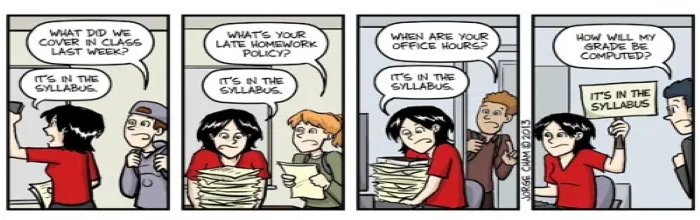
A syllabus is a document that outlines what you can expect from a college course, and what is expected of you. It tells you everything you need to know about how the course will be run. You will receive a syllabus for each of your courses and reading those syllabi will help you know what to expect during the semester.

Start Now to be Ready for Fall!
College, Here I Come! June 30, 2022
If you don’t have a transition plan yet, take some time this summer to plan and strengthen the skills you will need in the fall. Here are some things to work on so you will be ready to hit the ground running in September!
How Independent are You (Really)?
Can I Get a Ride? May 31, 2022
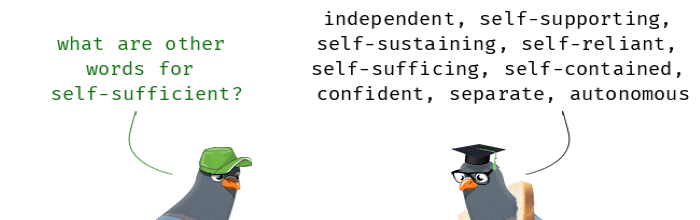
Transitioning to college in the fall? When you go away to school, you will need to be much more independent than you may be used to, both personally and academically. Take some time this summer to strengthen the skills you will need to be independent in the fall. Here are a few things to reflect on, and improve, if you are not already proficient.
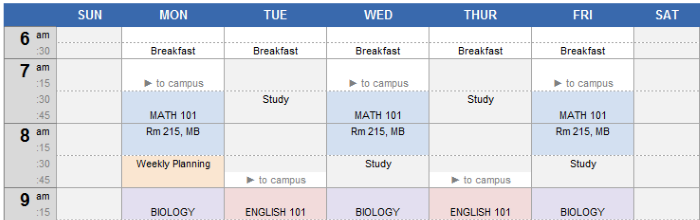
8 Strategies for Selecting an ADHD-Friendly Course Schedule
Ready to Register? April 15, 2022
Feeling overwhelmed trying to pick a workable schedule for next semester? You’re not alone! Selecting the right courses for you can be key to a successful semester, but sometimes your choices seem fairly limited. The result? Stress! Here are eight strategies for putting together a great schedule for next semester.

Relax? Relax!
Chill, Dude ... March 24, 2022
According to the Oxford Dictionary, relaxation is “a state of being free from tension and anxiety.” But many people with ADHD have a hard time relaxing. This may be because they live in a constant state of stress, or because they have trouble making time for themselves. Read on for a discussion about relaxation including strategies and tips to help you make relaxation part of your daily routine.
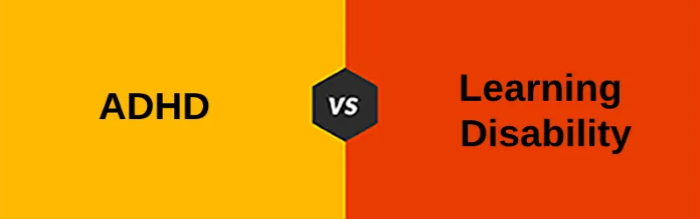
Is ADHD a Learning Disability?
IOW, ADHD VS LD February 22, 2022
Attention Deficit Hyperactivity Disorder (ADHD) is not considered a learning disability (LD). However, between 30 and 50 percent of people with ADHD also have a specific learning disability. Each condition makes learning difficult, and people with both conditions can find learning extremely challenging (Learning Disabilities Association of America, n.d.). Read on to learn more!

TALKING TO YOUR PROFESSORS
Yo, Prof! 'Sup?! February 1, 2022
Positive interaction with your professors has been identified as one of the keys to student success. Micari & Pazos found that the student–faculty relationship may be even more important in courses that are "highly challenging and anxiety-provoking" (2012). Research shows that having a constructive student-faculty relationship can result in better course grades and course confidence (Micari & Pazos, 2012) and can have a positive influence on academic motivation (Trolian, Hanson, Jach, & Pascarella, 2016). So talk to them!

TO TELL OR NOT TO TELL . . .
Disclosing Your ADHD, January 10, 2022
Having a hidden disability like ADHD allows you to decide if, when, and how to disclose it to people. It is a very personal decision. Some college students choose not to disclose, for various reasons. Some consider college a fresh start, a new school where you can create a new persona. They don’t want to stand out from classmates. Others incorrectly believe that going to college means they have outgrown their ADHD and they will no longer need help to succeed academically. While disclosing your ADHD is not required by colleges, it is necessary if you want to request and receive accommodations.

I'LL DO IT LATER . . .
Procrastination, December 12, 2021
Do you put off tasks until the last minute? You are not alone. Research shows that about 90% of college students procrastinate while reading, writing, or studying. Between 33-50% of undergraduates report being “chronic procrastinators,” spending less time researching information required to perform tasks and underestimating how long it takes to complete assignments. Procrastination affects the “quantity and quality of work completed and is associated with lower exam scores, lower quality papers/projects, late/missing assignments, and poor study skills” (Bolden & Fillauer, 2020). Procrastination is a powerful thing, especially for those with ADHD.

STOP THE NEGATIVE SELF-TALK!
Be Kind to Yourself, November 22, 2021
I’m a failure. I’m a joke. I’m so stupid. I’m not good at anything. This negative self-talk has many names – the inner critic, the judge, the gremlin, self-criticism – but whatever you call it, it’s an inner voice that “judges you, doubts you, belittles you, and constantly tells you that you are not good enough” (Vilhauer, 2016). And trash-talking yourself is stressful, can squelch your self-confidence, and can get in the way of your success.

TIRED OF BEING TIRED?
Get Some Sleep, November 4, 2021
How much sleep did you get last night? Most adults need between seven and nine hours every night. According to Dr. Sanjay Gupta, author of Keep Sharp: Build a Better Brain at Any Age, “sufficient sleep keeps you sharp, creative, attentive, and able to process information quickly.” But an estimated 25 to 50% of people with ADHD are sleep-challenged, and may have trouble falling asleep at night, waking up in the morning, and/or remaining alert during the day. They may also suffer from other sleep conditions like sleep apnea, narcolepsy, and restless leg syndrome.

WHAT TIME IS IT?!
Are you time blind?, October 15, 2021
How many times have you spent two minutes watching TikTok videos and then suddenly realized that two hours had passed? Or studying for what seems like three hours, and discovering it has only been 20 minutes? How often do you show up late for appointments because you misjudged the time it takes to get somewhere? Many people with Attention Deficit Hyperactivity Disorder (ADHD) have poor time awareness, sometimes called “time blindness”, which makes it hard to estimate how long something will take. That’s because the ADHD brain processes time differently than a neurotypical brain.

SELF-ADVOCACY FOR COLLEGE STUDENTS WITH ADHD
Get What You Deserve, October 1, 2021
Students with ADHD and/or learning disabilities (LD) are supported through high school via Individual Education Program (IEPs) and accompanying accommodations which guarantee academic success. But once a student enrolls in college, there is no team to support them and no guarantee of academic success. It is up to the student to seek out help, provide documentation of a disability, get approved, and then receive accommodations. College students with disabilities need self-advocacy skills to ask for the help they need to receive equal access to educational resources. Self-advocacy for students with ADHD has been shown to be an important factor in determining persistence to graduate.

The Doctor is In!
Dr. Liz has worked in higher education for more than 25 years, including many years of teaching undergrad courses in information technology. Her research focuses on accessibility; the student/faculty relationship; and self-advocacy in students with learning disabilities and ADHD. She's also a certified ADHD Life Coach!
Previous Posts
-
 Hydration for Better Focus
11/1/2025
Hydration for Better Focus
11/1/2025
-
 Scroll Control: Tech Addiction
10/5/2025
Scroll Control: Tech Addiction
10/5/2025
-
 First Two Weeks of Semester
9/1/2025
First Two Weeks of Semester
9/1/2025
-
 Back to School Brain Boost
7/31/2025
Back to School Brain Boost
7/31/2025
-
 ADHD & Decision Fatigue
6/30/2025
ADHD & Decision Fatigue
6/30/2025
-
 Making Summer Count
5/31/2025
Making Summer Count
5/31/2025
-
 Writing&Research Overwhelm
4/27/2025
Writing&Research Overwhelm
4/27/2025
-
 Progress Over Perfection
3/29/2025 -
 Stay on Top of Your Work
2/28/2025 -
 Creating Habits that Stick
1/31/2025 -
 EF on Stress and Anxiety
3/31/2024 -
 The Myth of Multitasking
3/31/2024 -
 Time Management
10/15/2023 -
 Paying the Price for ADHD
8/26/2023 -
 Body Doubling with ADHD
3/18/2023 -
 Ready, Set, Goals!
1/12/2023 -
 Syllabus 101
7/31/2022 -
 Start Now - Be Ready for Fall!
5/31/2022 -
 How Independent are You?
5/31/2022 -
 ADHD-Friendly Course Schedule
4/15/2022 -
 Relaxation 101
3/24/2022 -
 IS ADHD a Learning Disability?
2/22/2022 -
 Talking to Professors
2/1/2022 -
 Self-Disclosure
1/10/2022 -
 Procrastination
12/12/2021 -
 Negative Self-Talk
11/21/2021 -
 Importance of Sleep
11/4/2021 -
 Time Blindness
10/15/2021 -
 Self-Advocacy & College Students
10/1/2021 -
 Welcome
10/1/2021