Control the Scroll: Tackling Technology Addiction
by Dr. Liz, October 5, 2025

 How many times have you opened TikTok “just for a minute” and looked up an hour later wondering where the time went?
You’re not alone. The average American checks their
phone 205 times a day (that’s about once every seven minutes)
and spends nearly a quarter of their waking hours staring at it.
How many times have you opened TikTok “just for a minute” and looked up an hour later wondering where the time went?
You’re not alone. The average American checks their
phone 205 times a day (that’s about once every seven minutes)
and spends nearly a quarter of their waking hours staring at it.
For college students, it’s even more intense: almost seven hours a day on the phone, with 113 pickups
(Bradley & Howard, 2023). And if you’ve ever
thought, “I might be addicted to my phone,” you’re in good company:
40% of young adults feel the same way (Miller, 2025).
What Is Tech Addiction?
 Tech addiction isn’t about being online a lot; most of us need screens for school, work, and connection. It becomes a
problem when you can’t stop using tech even when you want to or when it starts affecting your focus, sleep, or mood.
You might catch yourself:
Tech addiction isn’t about being online a lot; most of us need screens for school, work, and connection. It becomes a
problem when you can’t stop using tech even when you want to or when it starts affecting your focus, sleep, or mood.
You might catch yourself:
- Reaching for your phone automatically when you feel bored or anxious
- Scrolling to avoid starting homework or dealing with stress
- Saying “just one more video” for the tenth time
There’s no official diagnosis for “technology addiction,” but psychologists describe it as excessive use that causes distress or problems in daily life.
When Regular Use Becomes a Problem
 There’s a difference between using technology a lot and feeling like you can’t stop. Regular use includes long hours online for class, watching a few YouTube videos before bed, binge-watching a show, or texting friends. Tech use becomes problematic when you compulsively check your phone, lose hours scrolling, or feel anxious when you’re disconnected.
If your screen time is starting to interfere with your studying, sleep, or social life, it’s worth paying attention.
There’s a difference between using technology a lot and feeling like you can’t stop. Regular use includes long hours online for class, watching a few YouTube videos before bed, binge-watching a show, or texting friends. Tech use becomes problematic when you compulsively check your phone, lose hours scrolling, or feel anxious when you’re disconnected.
If your screen time is starting to interfere with your studying, sleep, or social life, it’s worth paying attention.
Why ADHD Brains Are Especially at Risk
 Dopamine is the brain’s “feel-good” chemical; it’s what helps you feel motivated, rewarded, and focused. ADHD brains process dopamine differently. Their dopamine levels are naturally lower and harder to regulate. That means it takes more novelty, stimulation, or excitement to feel that same “spark.” And technology provides all three! Social media apps, video games, YouTube, etc., are all designed to give you quick, tiny dopamine hits through likes, sounds, and notifications. Every ping says, “Hey! Here’s something new!”
And your brain can't get enough.
Dopamine is the brain’s “feel-good” chemical; it’s what helps you feel motivated, rewarded, and focused. ADHD brains process dopamine differently. Their dopamine levels are naturally lower and harder to regulate. That means it takes more novelty, stimulation, or excitement to feel that same “spark.” And technology provides all three! Social media apps, video games, YouTube, etc., are all designed to give you quick, tiny dopamine hits through likes, sounds, and notifications. Every ping says, “Hey! Here’s something new!”
And your brain can't get enough.
Why It’s So Hard to Stop
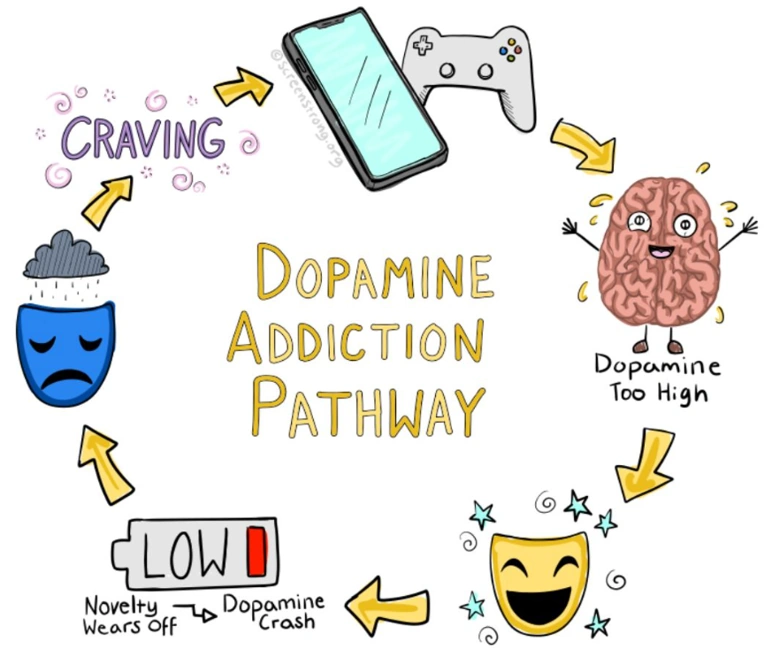 Digital apps and games are literally built to keep you hooked. Every swipe, sound, or alert triggers a burst of
dopamine. Your brain remembers that good feeling and wants to repeat it. It’s the same pattern seen in other addictive
behaviors:
Digital apps and games are literally built to keep you hooked. Every swipe, sound, or alert triggers a burst of
dopamine. Your brain remembers that good feeling and wants to repeat it. It’s the same pattern seen in other addictive
behaviors:
- You feel pleasure.
- Your brain craves more.
- You keep going, even if it’s hurting your focus, sleep, or grades.
To quote Jeremy Edge, International Certified Gaming Disorder Counselor: "From Fortnite to TikTok, video games and social media channels are carefully designed to encourage habitual use.” And while apps are designed to be addictive for everyone, they are even more so for people with ADHD. Certain aspects of the ADHD brain make it uniquely vulnerable to the endless stream of dopamine hits that technology delivers:
- Impulsivity: If you have ADHD, impulse control can be tough. You might pick up your phone before your brain even realizes what’s happening. Social media companies know this. That’s why they build in features that give you instant feedback: likes, DMs, and that infinite scroll. It’s a perfect storm for ADHD impulsivity.
- Time Blindness: You tell yourself, “I’ll just watch one video.” Then suddenly it’s 2 a.m. and your assignment is still open in another tab. People with ADHD struggle to sense how much time has passed. Autoplay, “For You” pages, and endless feeds make it even easier to lose track.
- Emotional Regulation: ADHD often comes with strong emotions like stress, boredom, frustration; and technology offers an easy escape. Scrolling, gaming, or binge-watching can temporarily calm you down, but afterward you might feel even worse (and still have to deal with the thing you were avoiding).
How It Affects College Life
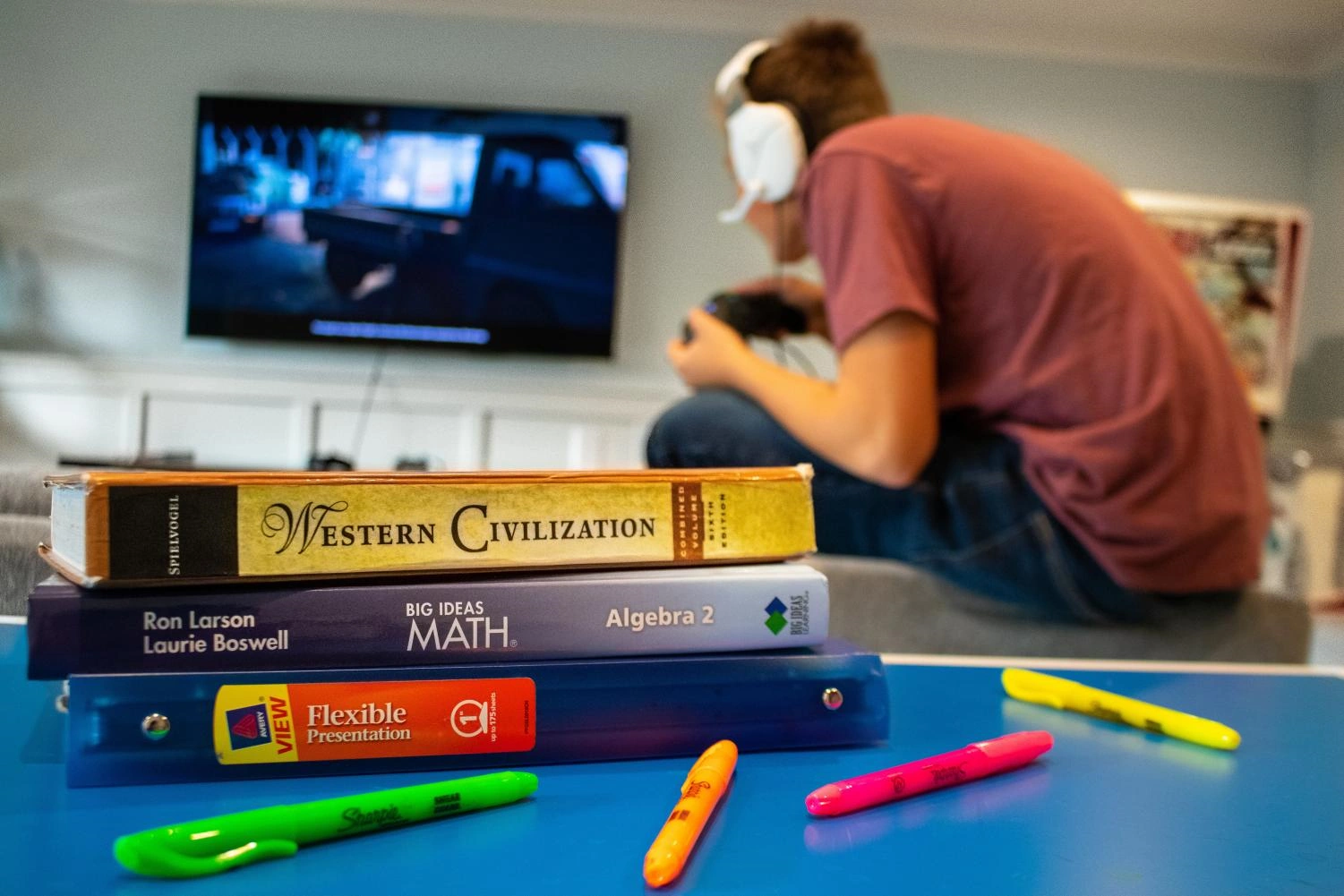 Too much screen time can quietly take over your life. It can:
- Ruin your focus when studying or writing papers
- Negatively affect your sleep schedule
- Make you feel anxious, lonely, or unmotivated
- Distract you during class or social time
- Create guilt about “wasting time,” which adds even more stress
According to the CDC, 25% of teens who spend 4 or more hours on screens show symptoms of anxiety or depression.
How to Break the Cycle
 You don’t need to delete your accounts or throw your phone in a lake. You just need to use tech with intention.
Here are a few ways to start:
You don’t need to delete your accounts or throw your phone in a lake. You just need to use tech with intention.
Here are a few ways to start:
- Set boundaries: You could try intermittent digital fasting or start and end your day screen free. You can make your bedroom a no-screen zone, and charge your phone in another room at night. Using app timers, focus modes, or a “no phone” hour before bed can help you start small as you change your habits.
- Practice mindful tech use and purposeful engagement: Check your screen time or notice when you reach for your phone. Is it boredom? Stress? Avoidance? Turn off notifications so you are not distracted by every ping. Turn off your phone and put it out of sight when working. Participate in “analog” (non-digital) activities, and try an "old-fashioned" alarm clock and/or watch.
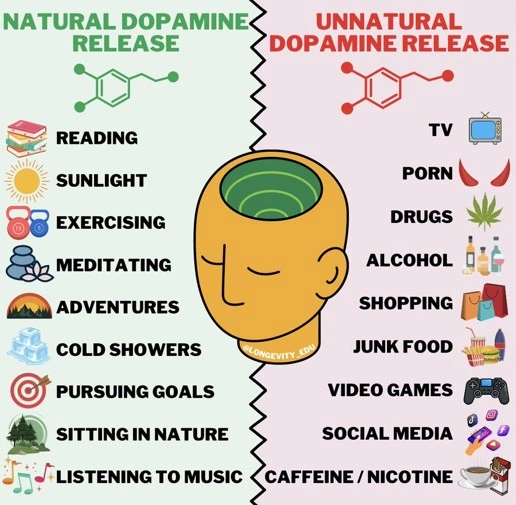
- Balance your dopamine: Try swapping “unnatural" dopamine (scrolling, notifications) for “natural" dopamine (exercise, liatening to music, creative hobbies, connecting with people).
- Try a fidget: Give your hands something to do (other than picking up your phone) during lectures or study breaks.
Final Thoughts
 Each swipe, like, or notification gives your brain a tiny dopamine rush, but too much can leave you scattered,
restless, and drained. Finding balance doesn’t mean cutting out tech, it means taking back control. Notice your
patterns. Make small adjustments. Give your brain time to reset. The goal isn’t to unplug completely, but to build a
relationship with technology that feels intentional, not automatic.
Each swipe, like, or notification gives your brain a tiny dopamine rush, but too much can leave you scattered,
restless, and drained. Finding balance doesn’t mean cutting out tech, it means taking back control. Notice your
patterns. Make small adjustments. Give your brain time to reset. The goal isn’t to unplug completely, but to build a
relationship with technology that feels intentional, not automatic.
If this article resonated with you, let’s stay connected! Follow me on Instagram
or subscribe to my Substack for more ADHD-friendly strategies, encouragement, inspiration, and tips.
Ready to stop spinning your wheels? Learn more about ADHD Coaching and how we can create personalized systems
to help you move forward. If you’re interested, schedule a free 30-minute consultation. You don’t have to do
this alone.
Have a question about ADHD coaching or this post? Contact me here!