Make Summer Count—Without Burning Out
by Dr. Liz, May 30, 2025

For students with ADHD, summer can feel like a welcome escape after a busy academic year. Without classes,
deadlines, and academic pressures, you may be tempted to completely unplug and relax. But summer is a great
opportunity to build routines and habits that support your executive function skills, so you’re better prepared
when the fall semester begins.
(NOTE: Preparation is especially important for students transitioning from high
school to college – check out "Transitioning to College? Start Now to Be Good to Go in the Fall!" to learn more.)
Executive functions
Executive functions (EF) are the cognitive skills that allow you to control and self-regulate behavior. They help you plan, organize, make decisions, solve problems, and stay focused on your goals. When your executive functions are working well, they help you stay on track and be successful. So, anything you can do to strengthen them this summer can help you when you go back to school.
Here are a few ideas to relax, recharge, and strengthen your executive functioning skills this summer:
1. Give Your Brain a Break
 Rest is not laziness, it’s fuel. And it’s critical for supporting executive functions! ADHD brains often run on
overdrive during the semester. So, take a little bit of time to sleep in, enjoy unstructured time, and explore
fun or creative activities without pressure. Regular rest improves attention, emotional control, memory, and
decision-making. This downtime allows your brain to recover and boosts long-term focus and motivation, which
will make it easier to return to school focused, motivated, and in control.
Rest is not laziness, it’s fuel. And it’s critical for supporting executive functions! ADHD brains often run on
overdrive during the semester. So, take a little bit of time to sleep in, enjoy unstructured time, and explore
fun or creative activities without pressure. Regular rest improves attention, emotional control, memory, and
decision-making. This downtime allows your brain to recover and boosts long-term focus and motivation, which
will make it easier to return to school focused, motivated, and in control.
2. Build a Flexible Daily Rhythm
 With no fixed schedule, summer can quickly drift away. It can get harder to keep track of time or stay motivated.
For students with ADHD, this can feel relaxing at first but often leads to frustration, guilt, or difficulty
getting started on even basic tasks. The day disappears and you realize you didn’t get anything done, even
something fun. Creating a loose daily structure helps maintain your sense of time without rigidity. Pick
two or three daily “anchors”: wake-up or bedtime, meals, exercise, or a block of time to work on a hobby or
interest. Do these things every day at approximately the same time. This helps maintain a sense of time
passing without the pressure of perfection. It’s not about scheduling every minute; it’s about setting
predictable points throughout your day that help your brain recognize the passage of time. This flexible
structure reduces cognitive load, making it easier to start tasks, manage time, and follow through without
feeling overwhelmed.
With no fixed schedule, summer can quickly drift away. It can get harder to keep track of time or stay motivated.
For students with ADHD, this can feel relaxing at first but often leads to frustration, guilt, or difficulty
getting started on even basic tasks. The day disappears and you realize you didn’t get anything done, even
something fun. Creating a loose daily structure helps maintain your sense of time without rigidity. Pick
two or three daily “anchors”: wake-up or bedtime, meals, exercise, or a block of time to work on a hobby or
interest. Do these things every day at approximately the same time. This helps maintain a sense of time
passing without the pressure of perfection. It’s not about scheduling every minute; it’s about setting
predictable points throughout your day that help your brain recognize the passage of time. This flexible
structure reduces cognitive load, making it easier to start tasks, manage time, and follow through without
feeling overwhelmed.
3. Practice Time Management with Low-Stakes Projects
 Without deadlines, it’s easy for time to slip away. Summer is a perfect time to practice
"planning backward"
with something fun—a personal project, trip, or activity. Backward planning helps you stay focused on the
desired result, which can be motivating. It’s a structured approach but has built-in flexibility to allow you
to be creative in your problem solving. Plan a hike, a trip to the beach, or a game night with family or
friends. Break the big task down into its
smaller component parts and estimate how long the steps will take. Maybe create a simple timeline to keep yourself focused.
This will help improve your ability to manage and allocate time intentionally. Because the stakes are low and
the project is self-chosen, it’s easier to start. This helps you practice overcoming procrastination and
resistance in a more relaxed setting. It’s all great practice for your next term paper or class project.
Without deadlines, it’s easy for time to slip away. Summer is a perfect time to practice
"planning backward"
with something fun—a personal project, trip, or activity. Backward planning helps you stay focused on the
desired result, which can be motivating. It’s a structured approach but has built-in flexibility to allow you
to be creative in your problem solving. Plan a hike, a trip to the beach, or a game night with family or
friends. Break the big task down into its
smaller component parts and estimate how long the steps will take. Maybe create a simple timeline to keep yourself focused.
This will help improve your ability to manage and allocate time intentionally. Because the stakes are low and
the project is self-chosen, it’s easier to start. This helps you practice overcoming procrastination and
resistance in a more relaxed setting. It’s all great practice for your next term paper or class project.
4. Reflect on Your Academic Toolkit
 Summer is a good time to look back. What worked last semester? What didn’t? Did certain types of assignments cause you more trouble or stress? Did your notetaking habits work for you? Was it easier to study in a particular location? Did your study strategies support your learning and academic success? Think about one thing to drop, one thing to keep, and one thing to try in the fall. Write them down and put them with your back-to-school supplies.
This reflection strengthens your metacognition (thinking about thinking), which helps you understand how you think, learn, and work best. By reviewing what worked (or didn’t) last semester you begin to recognize how your own learning processes work. Then you can select and try strategies and monitor how well they work. ultimately leading to better academic performance, better decision-making, and overall well-being. Knowing what helps you be successful helps you stick to good habits and adjust unhelpful ones.
5. Strengthen One Executive Function Skill
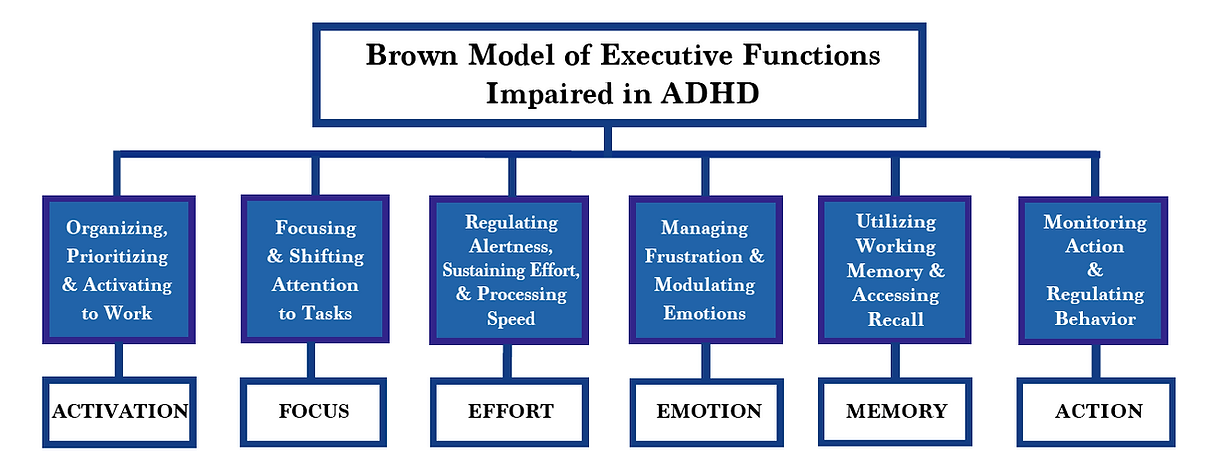 Pick one executive function skill (like organization, prioritization, time management, emotional regulation, or
task initiation) that gives you trouble and build it into your summer life. For example:
Pick one executive function skill (like organization, prioritization, time management, emotional regulation, or
task initiation) that gives you trouble and build it into your summer life. For example:
- Task initiation: Practice starting chores or errands with the “5-minute rule” to combat procrastination.
- Planning: Try preparing a meal for yourself or your family (including shopping and cooking), or batching your errands by location to save time or gas.
- Working memory: Play memory games, do mindfulness exercises, or try using checklists or new routines.
Strengthening just one EF skill can create a ripple effect that improves many areas of your academic and daily life. Because EF skills are interconnected, progress in one area often supports growth in others. Starting small and building gradually is the key to lasting progress. Experiencing success in one EF area gives you a tangible win, improving motivation and building persistence.
Final Thought

You don’t need to be hyper-productive this summer, but you can help yourself by working on your executive function skills. A few intentional tweaks to your daily rhythm now can make the transition back to school smoother, less stressful, and more confident. Select one or two of the strategies above and give them a try. Have a great summer!
If this article resonated with you, let’s stay connected! Follow me on Instagram
for more ADHD-friendly strategies, encouragement, inspiration, and tips.
If you’re tired of spinning your wheels, I’m here to help!
Schedule a 30-minute Complimentary Consultation to
learn more about coaching. Together, we can create personalized systems that help you get unstuck, make real
progress, and maybe even enjoy the journey a little more. You don’t have to do this alone.
Image Sources
- Woman relaxing in nature: https://insighttimer.com/tariro/guided-meditations/peace-and-happiness
- Routine Sign: https://discerningparenting.com/visual-routine-charts/
- Time Management: https://pixabay.com/illustrations/time-management-business-planning-1966396/
- Cornell Notes Page: https://studentlearning.stanford.edu/cornell-method-taking-notes
- Thomas Brown Model: https://www.brownadhdclinic.com/brown-ef-model-adhd
- Strong Brain: https://www.time4learning.com/blogs/how-to/special-needs
Specific questions and topic suggestions can be emailed to questions@ADHDinCollege.com.