Creating Habits that Stick
by Dr. Liz, January 27, 2025

Building strong habits is a key to success in college, especially for students with ADHD. While developing habits can be challenging due to difficulties with consistency, motivation, and organization, it is possible to create and maintain habits with the right strategies. Read on for some ideas to help you build lasting habits and set yourself up for success.
Why Habits Matter for ADHD Brains
 Habits help simplify life by reducing the mental effort required to make daily decisions. For students with ADHD, who often face challenges with executive functioning, habits can provide structure and consistency. From staying on top of assignments to managing self-care, small, intentional habits can lead to significant improvements in productivity and overall well-being.
The ADHD Brain and Habit Formation
 Understanding how ADHD affects habit formation is essential. ADHD brains often seek immediate gratification and struggle with delayed rewards, which can make it harder to stick to long-term goals. Additionally, impulsivity, boredom, and time-blindness can derail progress. However, by breaking habits into smaller steps and rewarding yourself along the way, you can work with your brain instead of against it.
Start Small: The Power of Micro-Habits
 One of the best ways to create habits that stick is to start small. Instead of aiming for a massive overhaul, focus on manageable micro-habits.
"Micro" or "tiny" habits are very small actions that, over time, form into bigger habits. These tiny actions require minimal effort
and minimal time (some as short as a few seconds!). Repeating these small habits regularly can lead to
significant changes in your life. The key is to start small and be consistent. For example, study for just five minutes a day to get started.,
organize one section of your desk instead of the whole room, review one page of notes after class, or get up and walk for 5 minutes every hour.
These small wins build momentum and make the process less overwhelming. Once these micro-habits become
automatic, you can build on them by inreasing the time or amount or whatever. Small steps lead to big changes!
One of the best ways to create habits that stick is to start small. Instead of aiming for a massive overhaul, focus on manageable micro-habits.
"Micro" or "tiny" habits are very small actions that, over time, form into bigger habits. These tiny actions require minimal effort
and minimal time (some as short as a few seconds!). Repeating these small habits regularly can lead to
significant changes in your life. The key is to start small and be consistent. For example, study for just five minutes a day to get started.,
organize one section of your desk instead of the whole room, review one page of notes after class, or get up and walk for 5 minutes every hour.
These small wins build momentum and make the process less overwhelming. Once these micro-habits become
automatic, you can build on them by inreasing the time or amount or whatever. Small steps lead to big changes!
Use Immediate Rewards

ADHD brains thrive on immediate gratification, so attaching rewards to your habits can increase motivation. Anticipated rewards drive motivation, both of which are strongly influenced by dopamine. If you know a reward is coming, it can help drive you to complete a task for the dopamine hit. For example:
- After completing a study session, treat yourself to your favorite snack or listen to a favorite song.
- Use apps like Habitica to gamify your progress and earn points for completing tasks.
- Have a mini dance party every time you complete a task.
Celebrating small wins will help keep you motivated, especially when you find a reward that works for you.
Try Visual Reminders and External Cues
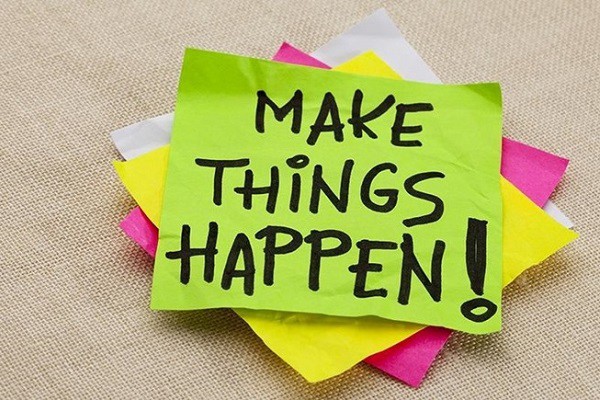 External reminders can make it easier to remember and follow through with habits.
They are in-your-face reminders of tasks that need to be done or things you shouldn't forget. For example,
use sticky notes, whiteboards, or digital reminders to keep your habits front and center. Place reminders and cues in strategic locations.
For example, leave your planner on your desk, put workout clothes next to your bed, or hang a sign on
your bathroom mirror or front door.
Create habit triggers, such as “After I finish breakfast, I’ll review my class notes for five minutes.”
External reminders can make it easier to remember and follow through with habits.
They are in-your-face reminders of tasks that need to be done or things you shouldn't forget. For example,
use sticky notes, whiteboards, or digital reminders to keep your habits front and center. Place reminders and cues in strategic locations.
For example, leave your planner on your desk, put workout clothes next to your bed, or hang a sign on
your bathroom mirror or front door.
Create habit triggers, such as “After I finish breakfast, I’ll review my class notes for five minutes.”
Build Accountability

Accountability helps people with ADHD stay on task and finish what they start. It can help you manage your time, focus your energy, and be more efficient. Accountability can provide the external structure needed to reinforce habits. Try these ideas:
- Partner with a friend, classmate, or ADHD coach who can check in on your progress.
- Set alarms or timers to initiate habits, like starting a study session with the Pomodoro technique.
- Join a study group or share your goals with others to create a sense of responsibility.
Body doubling also works really well for many people with ADHD, helping them be more motivated and productive.
Practice Self-Compassion and Resilience
 Building habits is a process, and perfection isn’t required. Here’s how to stay resilient:
- Expect setbacks. Missing a day or two doesn’t mean you’ve failed. Just pick up where you left off.
- Learn from mistakes. If a habit isn’t working, adjust it to fit your needs better.
- Focus on progress over perfection. Every small improvement is a step forward.
Employ Tools to Support Habit-Building
 Take advantage of tools and technology designed to support habit formation:
- Use habit-tracking apps like Streaks or Loop to visualize your progress.
- Incorporate ADHD-friendly planners or bullet journals to organize tasks and track habits.
- Set recurring calendar reminders to build consistency.
Use Routines as a Foundation for Habits

Routines provide the structure needed to maintain habits. Routines that work for you will simplify your life. For example, try creating morning and evening routines to start and end your day with intention. Or establish a consistent study routine by choosing a specific time and place for studying. You could also incorporate self-care routines into your day to support your physical and mental health.
Remain Flexible and Adaptable
 Habits may need to evolve over time, especially as your schedule or priorities change. Stay flexible:
- Adjust habits to fit new circumstances, like changing your study time if your class schedule shifts.
- Avoid all-or-nothing thinking. Even a small effort, like reviewing one page instead of studying for an hour, counts.
- Reflect regularly on what’s working and make adjustments as needed.
Conclusion: New Habits are a Work in Progress
Building habits takes time but starting small and focusing on one habit at a time can make the process more manageable. Be flexible - find strategies that work with how you think and how you get things done. If something does not go as planned, try again with a new strategy. Remember, every small step you take helps get you closer to your goals. With patience, self-compassion, and the right strategies, you can create habits that stick!
Images:
Change Your Habits image: https://www.health.harvard.edu/blog/five-healthy-habits-net-more-healthy-years-2020021918907
Brain with cogs: https://www.addept.org/living-with-adult-add-adhd/adhd-advantage
Micro Habits: https://kenrickvaz.com/2022/04/18/microhabits-to-change-your-life/
Gift: https://www.tasnimnews.com/en/news/2013/11/03/182169/mindful-individuals-less-affected-by-immediate-rewards
Post-It Notes: https://www.ppcian.com/motivating-and-making-things-happen/
Body Doubling: https://www.stylist.co.uk/health/mental-health/what-is-body-doubling-adhd-tool-productivity/763543
Self-Compassion: https://www.therapistaid.com/therapy-article/how-to-practice-self-compassion
Planner: https://www.silkandsonder.com/blogs/news/whats-the-difference-between-a-bullet-journal-and-a-planner
Routine: https://www.theeducationpeople.org/blog/the-power-of-routines-in-english/
Flexible Thinking: https://www.linkedin.com/pulse/flexible-thinking-ayan-bhattacharya/
Specific questions and topic suggestions can be emailed to questions@ADHDinCollege.com.